Stephen Burrows Inspired New Additions
posted on: Monday, June 3, 2013
I recently saw a fabulous exhibition titled, "When Fashion Danced," at the Museum of The City of New York. The exhibit pays homage to Stephen Burrows, a 70's designer. It features his original sketches, photographs and more than 50 of his designs.
He is known for color blocking, vibrant colors, metallic fabrics and slinky silhouettes that cling to the body.
I put together a selection of pieces for our weekly New Additions inspired by the one and only Stephen Burrows. The piece below is a stunning contemporary Alan Anderson necklace.
Click here to see the rest of this weeks New Additions.
Stay Fabulous,
Carole
Shine Exhibition at the Textile Museum of Canada
posted on: Thursday, May 23, 2013
This is a fabulous exhibition featuring handmade objects that are both celebratory and commonplace, excessive and unassuming. The Exhibition features an array of exquisite traditional garments and accessories from the Museum's permanent collections integrated with the work of contemporary artists. The exhibition is presented in conjunction with the Toronto International Jewellery Festival and the 2013 Society of North American Goldsmiths (SNAG) Conference. The exhibition is open at the Textile Museum of Canada until September 2nd, 2013.
Wedding dress (jumlo)
Pakistan, Northwest Frontier Province, Indus KohistanMid 20th centuryCotton, metal and glass beads, plastic buttonsPlain and twill woven, embroidered, beaded, hand- and machine-sewnGift of John Anderson, T87.0005
Women’s dresses, (jumlo), embellished with buttons, beads and metallic objects and made from up to several hundred small pieces of fabric are among the most lavishly decorated costumes in Asia. Jumlo are worn over trousers with finely embroidered cuffs and accompanying shawls. Their metal ornaments include coins, buttons and beads of mother-of-pearl, plastic, glass and brass, and various metal ornaments, often purpose-made. More recent additions to the traditional decorations are key-ring chains, thimbles and old zip-fasteners.
Though no scholarly information regarding textile production has ever been collected on jumlo from Northwest Frontier Province, the large number and variety of the metal decorations, and also the observation that women’s and children’s costumes are the most decorated, suggest that there is significant symbolism that runs far beyond pure aesthetics. The metallic embellishments on the jumlo probably signify ancient beliefs in the protective and auspicious properties of the shiny materials that survived cultural and religious changes – preserved in the remote communities of the region.
For more details go to the Textile Museum website.
Pakistan, Northwest Frontier Province, Indus KohistanMid 20th centuryCotton, metal and glass beads, plastic buttonsPlain and twill woven, embroidered, beaded, hand- and machine-sewnGift of John Anderson, T87.0005
Women’s dresses, (jumlo), embellished with buttons, beads and metallic objects and made from up to several hundred small pieces of fabric are among the most lavishly decorated costumes in Asia. Jumlo are worn over trousers with finely embroidered cuffs and accompanying shawls. Their metal ornaments include coins, buttons and beads of mother-of-pearl, plastic, glass and brass, and various metal ornaments, often purpose-made. More recent additions to the traditional decorations are key-ring chains, thimbles and old zip-fasteners.
Though no scholarly information regarding textile production has ever been collected on jumlo from Northwest Frontier Province, the large number and variety of the metal decorations, and also the observation that women’s and children’s costumes are the most decorated, suggest that there is significant symbolism that runs far beyond pure aesthetics. The metallic embellishments on the jumlo probably signify ancient beliefs in the protective and auspicious properties of the shiny materials that survived cultural and religious changes – preserved in the remote communities of the region.
Woman’s festive jacket
Southern China, Guizhou Province, Huangping county, 20th century
Miao people
Cotton, silk, metal foil, metal sequin
Damask, plain woven, warp-faced, supplementary warp, embroidered, appliquéd, hand-sewn
Gift of Caroline M. Walker, T92.0290
The Miao ethnic minority group has distinctive and beautiful clothing. The festive costume of the Miao women includes a long-sleeved jacket, long trousers, a long pleated skirt with a broad waistband, embroidered shoes, and various silver neck and head ornaments. The finest new clothes are worn by young women and men for the New Year festival that is the Miao courting period.
This jacket on is made from locally woven silk satin dyed with indigo and beaten repeatedly to achieve a shiny bronze color.
Southern China, Guizhou Province, Huangping county, 20th century
Miao people
Cotton, silk, metal foil, metal sequin
Damask, plain woven, warp-faced, supplementary warp, embroidered, appliquéd, hand-sewn
Gift of Caroline M. Walker, T92.0290
The Miao ethnic minority group has distinctive and beautiful clothing. The festive costume of the Miao women includes a long-sleeved jacket, long trousers, a long pleated skirt with a broad waistband, embroidered shoes, and various silver neck and head ornaments. The finest new clothes are worn by young women and men for the New Year festival that is the Miao courting period.
This jacket on is made from locally woven silk satin dyed with indigo and beaten repeatedly to achieve a shiny bronze color.
Woman’s apron
China, late 19th to early 20th century
Silk, cotton, gold thread, satin, embroidered, couched, hand-sewn
Gift of the estate of Elizabeth M.L. Gordon, T95.0001
Paired pleated aprons or skirts were part of the traditional Han Chinese costume and were worn for formal occasions with matching jackets by both men and women. They were formed of two overlapping sections and worn over pants. Bright and shiny for weddings and festivals, they featured auspicious symbols similar to those on other types of Chinese official clothes.
China, late 19th to early 20th century
Silk, cotton, gold thread, satin, embroidered, couched, hand-sewn
Gift of the estate of Elizabeth M.L. Gordon, T95.0001
Paired pleated aprons or skirts were part of the traditional Han Chinese costume and were worn for formal occasions with matching jackets by both men and women. They were formed of two overlapping sections and worn over pants. Bright and shiny for weddings and festivals, they featured auspicious symbols similar to those on other types of Chinese official clothes.
Stay Fabulous,
Carole
Punk: Chaos to Couture at The Met
posted on: Wednesday, May 22, 2013
Here's a fabulous selection of postcards from the Punk: Chaos to Couture show at The Met. The show was fabulous! Isn't it incredible how punk carried over in fashion over the years?
Balmain by Christphe Decarnin, Spring / Summer 2011
Vogue, March 2011
Photo by David Sims
Comme Des Garcons, Autumn / Winter 2004-5
Photo by Richard Burbridge
Chanel by Karl Lagerfeld, Spring/Summer 2011
Vogue, March 2011
Photo by Davis Sims
Stephen Sprouse, Autumn/Winter 1987-88
Photo by Roxanne Lowit
Stay Fabulous,
Carole
PUNK: From Chaos to Couture
posted on: Monday, May 13, 2013
Last Monday was the annual Costume Institute Exhibition Benefit at The Metropolitan Museum of Art. The exhibit this year is called PUNK: Chaos to Couture.
Andrew Bolton, Curator of The Costume Institute says, “Since its origins, punk has had an incendiary influence on fashion. Although punk’s democracy stands in opposition to fashion’s autocracy, designers continue to appropriate punk’s aesthetic vocabulary to capture its youthful rebelliousness and aggressive forcefulness.”
PUNK: Chaos to Couture will feature approximately 100 designs for men and women. The exhibit is on from May 9, 2013- August 14, 2013. Click here for details.
I selected fabulous punk inspired pieces from my collection which are now available at the CTVC online shop.
Punk fashion began in the mid-1970s in New York and London. The do-it-yourself punk attitude has been incredibly influential on today’s fashion and couture.
Stay Fabulous,
Carole
Punk'd on the Met Gala red carpet
posted on: Tuesday, May 7, 2013
See below photos of studs, and tartan on the Met gala red carpet that we loved!
Beyonce, in Givenchy Haute Couture, with Lorraine Schwartz jewels.
Christina Ricci, in Vivienne Westwood Couture, with Casadei shoes.
Hilary Rhoda, in Wes Gordon.
Paloma Faith, in Michael Cinco, with a Philip Treacy headpiece.
Rossella Jardini with Kylie Minogue, in Moschino.
Sarah Jessica Parker, in custom Giles, with a Philip Treacy headpiece, Fred Leighton jewels, and custom Christian Louboutin shoes.
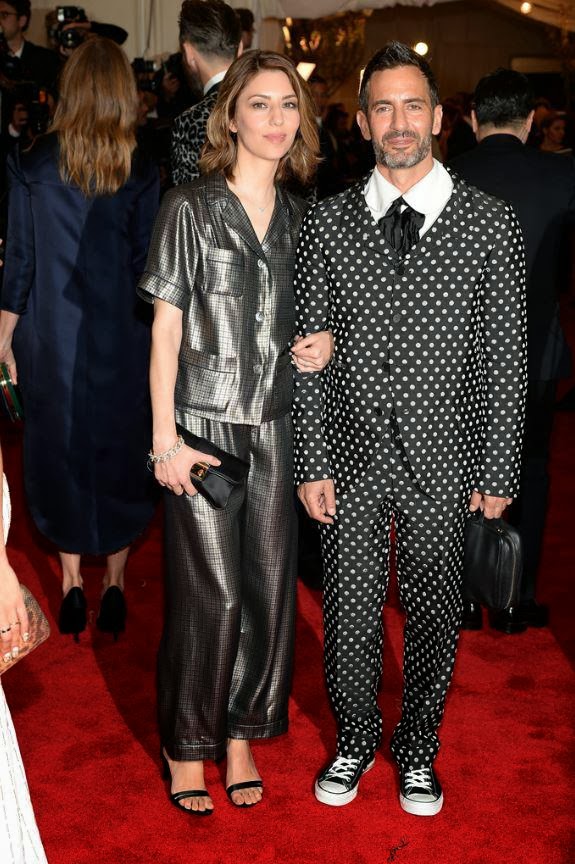
Sofia Coppola, in Marc Jacobs with the designer, in Comme des Garcons.
Tommy and Dee Hilfiger.
Stay Fabulous,
Carole
Carole Tanenbaum Vintage Collection Blog All rights reserved © Blog Milk Powered by Blogger